
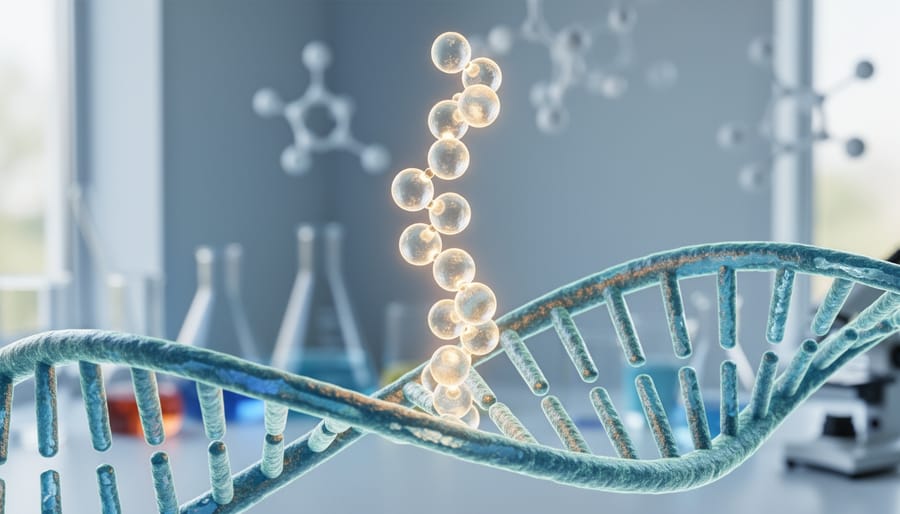
Kisspeptin is a small signaling protein, made by the KISS1 gene, that acts as the body’s master switch for puberty and reproduction. It tells the brain when to start the hormone chain that makes fertility possible. Researchers who study it, including the team behind this https://kylopeptides.com/product/kisspeptin/ research compound, see a molecule with unusual reach for its size.
The story of how scientists found it is a good one. KISS1 was first identified in the 1990s while researchers were hunting for genes that suppress the spread of cancer cells. Only years later did a separate line of work reveal its true calling: people with faulty kisspeptin signaling never go through normal puberty. A gene studied for one purpose turned out to matter most for another.
This article walks through that discovery in plain language, explains how kisspeptin works inside the body, and looks at why it matters for human health and for understanding how living systems regulate themselves. Curiosity-driven science like this shares something with eco-sailing innovation: both start by asking how nature already solves a problem, then building on the answer.
What Kisspeptin and the KISS1 Gene Actually Mean
Think of your DNA as a giant cookbook. A gene is a single recipe in that book, and a protein is the finished dish that recipe produces. The KISS1 gene is one of those recipes. When your cells follow it, they make a small protein that gets trimmed into short pieces called kisspeptins. “Kisspeptin” is simply the name for that finished product.
So what does this particular dish do? Picture a dimmer switch on a cabin light. Kisspeptin works like that for the body’s reproductive system, turning the activity up or down rather than just flipping it on or off. Without enough of it, the system stays dim. With the right amount, it glows at full strength.
You’ll run into a few terms as the story unfolds, so here’s a quick glossary:
- Gene
- A section of DNA that holds the instructions for making one specific protein.
- Hormone
- A chemical messenger released into the blood that tells other parts of the body what to do.
- Receptor
- A docking spot on a cell that a messenger molecule fits into, like a key in a lock.
- Hypothalamus
- A small region at the base of the brain that links the nervous system to the hormone system.
- GnRH
- Short for gonadotropin-releasing hormone, the brain signal that starts the chain of reproductive hormones.
- Puberty
- The stage of life when the body matures and becomes capable of reproducing.
Don’t worry about memorizing these. They’ll come back naturally as we follow the story, and each one will make more sense in context.
What makes kisspeptin remarkable is how much it does for such a small molecule. It sits near the top of a chain of command, nudging the brain to release the signals that guide growth and reproduction. Like a well-designed solar panel quietly feeding a whole boat’s electrical system, a tiny component ends up powering something much bigger. Understanding the recipe, the dish, and the dimmer switch gives you everything you need for the discovery story ahead.
The Discovery Story: From a Cancer Research Lab to Reproductive Biology
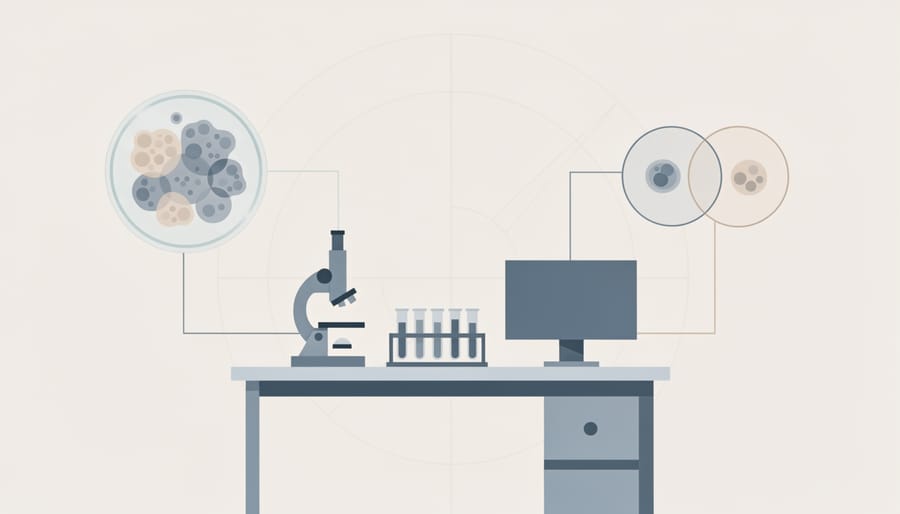
A Gene That Slowed the Spread of Cancer Cells
The story starts in a cancer lab, not a reproductive biology one. In the mid-1990s, researchers studying melanoma, an aggressive skin cancer, were hunting for genes that might explain why some tumor cells spread through the body while others stay put. Spreading, known as metastasis, is what makes cancer so dangerous, so any gene that could hold it back was worth a close look.
When the team introduced a particular piece of genetic material into melanoma cells, those cells became far less able to form distant tumors. The cells still grew, but they lost much of their ability to travel and settle elsewhere. The researchers had found a metastasis suppressor, and they named the gene KISS1.
The name has a friendly origin. The work was done in Hershey, Pennsylvania, famous for its chocolate Kisses, and the “SS” stands for “suppressor sequence.” It’s a small dose of lab humor tucked into a serious discovery.
Here’s the twist. Years later, scientists learned that the protein made from this gene does something quite different in the body. Its starring role turned out to be in reproduction, not cancer. But the name “kisspeptin” had already stuck, and it has stayed with us ever since.
The 2003 Turning Point: Puberty and a Missing Receptor
In 2003, the story took a sharp turn. Independent research groups, working separately, were studying families in which people never went through normal puberty. Their bodies simply didn’t start the hormone cascade that drives sexual maturation. When the teams compared genetic notes, they landed on the same culprit: a gene called GPR54, the blueprint for the kisspeptin receptor.
A quick word on receptors. Think of a receptor as a lock sitting on the surface of a cell, and kisspeptin as the key made to fit it. When the key turns in the lock, the cell gets a message and acts on it. If the lock is built wrong or missing, the key can be perfectly healthy and the message still never arrives.
That’s what the researchers saw. People with disruptions in the GPR54 gene had working reproductive organs, but the signal telling those organs to wake up never got through. Without a functioning receptor, kisspeptin had nowhere to deliver its instructions.
The finding was striking for two reasons. It showed that the kisspeptin system wasn’t a minor player; it behaved like a master regulator, sitting upstream of the other reproductive hormones and setting the whole sequence in motion. And it connected two very different threads: a gene first noticed in cancer research and a receptor now tied to the start of puberty.
Almost overnight, kisspeptin went from a curiosity to one of the most talked-about molecules in reproductive biology.
Why It Surprised Scientists
Imagine spending years studying how melanoma spreads, only to find that the gene you named after its cancer-slowing talent plays a starring role in puberty. That’s the kind of plot twist few researchers could have predicted. Cancer biology and reproductive biology sit in different corners of medicine, with different journals, conferences, and assumptions.
What made the finding so striking was how it came together. Separate research groups, working independently, traced the same receptor to the same surprising outcome. No single lab planned it. The answer emerged because people followed the evidence wherever it led, even when it crossed an unfamiliar border.
There’s a hopeful lesson in that. Good ideas often start out looking like they belong somewhere else, or like they’re too niche to matter. Solar and electric propulsion were once seen that way too. Staying curious and open-minded is often how the next big idea finally finds its place.
How Kisspeptin Works in the Body
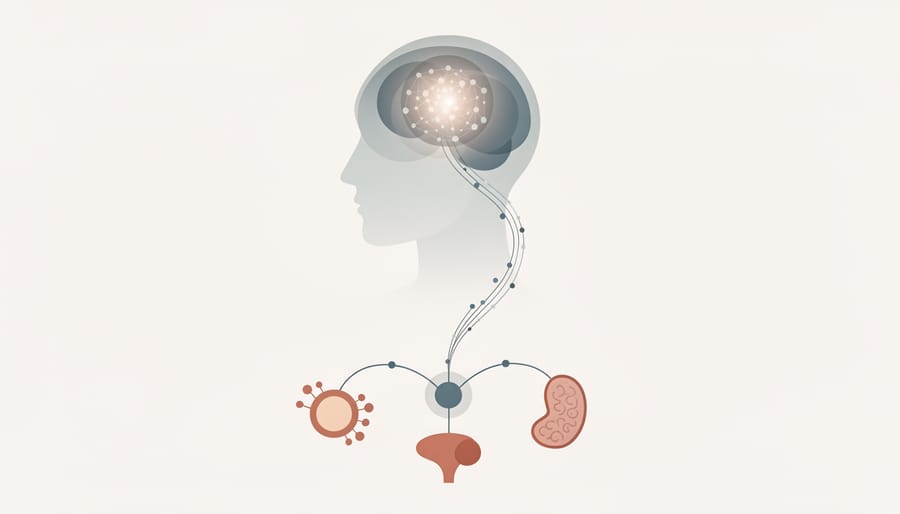
Think of kisspeptin as the first runner in a relay race, passing the baton to the next in line until the message reaches the finish. It all starts deep in the brain, in a region called the hypothalamus, which works like a control panel for many of the body’s basic systems. Specialized neurons there release kisspeptin, and research shows that kisspeptin activates GnRH neurons, the cells that kick off the reproductive hormone cascade.
Here is the chain, one handoff at a time:
- Kisspeptin neurons in the hypothalamus release kisspeptin.
- Kisspeptin switches on GnRH neurons, the next runners in the relay.
- GnRH travels to the pituitary gland, a pea-sized hormone hub at the base of the brain.
- The pituitary releases hormones into the bloodstream.
- Those hormones reach the ovaries or testes and prompt them to do their work.
What makes kisspeptin especially interesting is its role as a gatekeeper. Researchers believe it helps connect the body’s reproductive system to what is happening elsewhere, such as available energy and circulating hormones. It’s a bit like the energy-saving systems on an efficient boat, which quietly check the power supply before anything draws on it. The body appears to weigh its resources before committing to something as demanding as reproduction.
It’s worth keeping this in perspective. Scientists have mapped the main relay with confidence, but the finer details of how kisspeptin neurons read all those incoming signals are still being studied. That ongoing curiosity is exactly what makes the field so exciting.
Where Kisspeptin Research Is Used and Why It Matters
Kisspeptin research reaches into a few distinct areas, and most of it is still being actively studied. One of the biggest is puberty. Because kisspeptin helps switch on the body’s reproductive hormone system, scientists use it to understand why puberty starts when it does, and what happens when that timing runs too early or too late. Studying people with disrupted kisspeptin signaling has given researchers a clearer map of how the process normally unfolds.
Fertility research is another focus. Reproductive hormones depend on a carefully timed chain of signals, so kisspeptin offers a window into how that timing is controlled. Early studies are exploring whether this knowledge could one day help explain certain fertility challenges. It’s worth being clear that these are research questions, not settled treatments, and anyone with personal health concerns should talk with a medical professional.
Kisspeptin is also a handy research tool. Because it sits near the top of the hormone control chain, scientists can use it to test how the rest of the system responds, which helps them study reproductive hormone control in general.
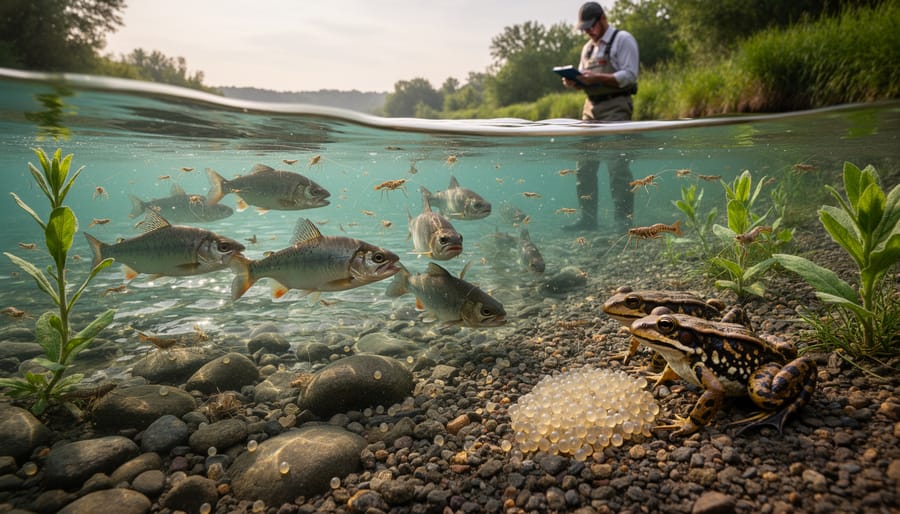
There’s a wider lesson here that fits the spirit of this site. Understanding how natural systems work tends to make us better stewards of them. Reproduction in fish, amphibians, and other wildlife depends on healthy freshwater and marine environments, and that is one more reason cleaner waterways matter. Choices like the ones behind the electric boat benefits many boaters now enjoy help keep those habitats quiet and clean, and thoughtful approaches to recycling & sustainability carry that care through the whole life of the technology.
Common Questions About Kisspeptin and the KISS1 Gene
These are the questions people ask most often, answered briefly. Where the science is settled, I say so, and where researchers are still working things out, I flag that too.
Why is it called kisspeptin?
The name nods to Hershey, Pennsylvania, where the gene was first described and where the famous chocolate Kisses are made. The “peptin” part simply reflects that it’s a small protein fragment, or peptide.
Is KISS1 still linked to cancer research?
Yes, the gene was first found as a suppressor of melanoma spread, and scientists still study that connection. How it works in different cancers is an area of ongoing investigation rather than a settled answer.
Does kisspeptin affect only humans?
No. Kisspeptin signaling has been found in many other mammals and in other vertebrates, which is why it’s studied in wildlife biology as well as human health.
Is kisspeptin available as a treatment?
It’s mainly a research tool right now, and its therapeutic potential is still being explored. If you have questions about your own health, a medical professional is the right person to ask.
Curious readers often ask whether kisspeptin is the same as a hormone. It acts like one in the sense that it carries a signal that helps start a chain of hormone release, but it works upstream of the better-known reproductive hormones as a kind of starter switch.
The story of kisspeptin shows what happens when researchers stay curious. A gene first noticed for slowing cancer cells turned out to help guide the start of puberty, and that surprise opened whole new paths of study. Nobody planned that turn. It came from people willing to follow an unexpected clue.
We see clean boating the same way. Every quiet electric motor and every panel soaking up sunlight began as a small idea someone refused to dismiss. If that spirit appeals to you, take a look around the site and see what electric and solar-powered boating could open up for you.