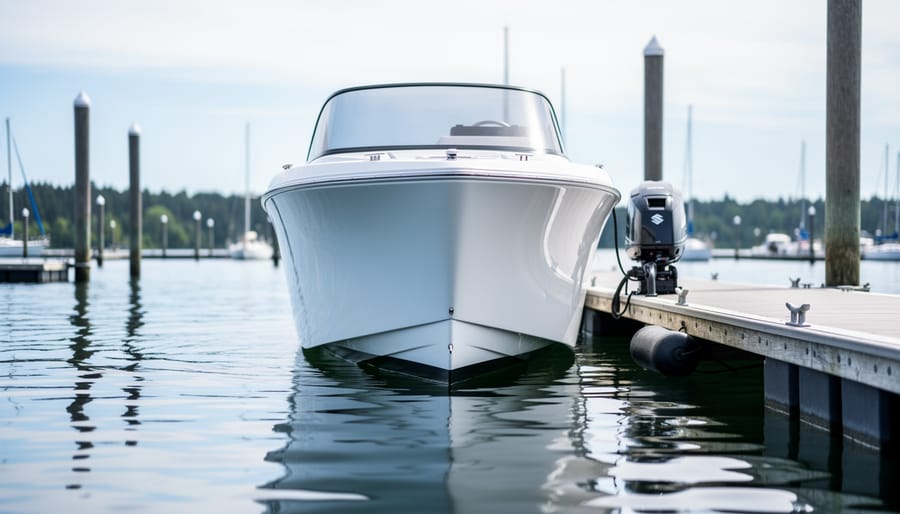
An electric boat is a vessel driven by an electric motor and a battery bank instead of a gasoline or diesel engine. That one change reshapes almost everything about time on the water: how quiet it feels, how much it costs to run, and what it leaves behind in the lake, river, or bay you love.
The benefits fall into three simple groups. Environmental gains come first, since there’s no tailpipe exhaust and no fuel to spill. Next is the experience itself, with smooth, near-silent cruising that lets you hear birdsong and conversation. Finally, there’s ownership, where fewer moving parts generally means simpler upkeep. Advancements in battery capacity and motor efficiency keep widening what’s possible, from relaxed day trips to longer, more ambitious outings.
That solar link is where things get exciting. Pairing your boat with solar panels for your yacht can turn sunny hours at the dock into free miles on the water. This guide walks you through each benefit in plain language, shows how electric boats are used in the real world, and answers the questions most people ask before making the switch.
What an Electric Boat Is and What “Benefits” Really Means
An electric boat is simply a boat that moves using stored electricity instead of burning gasoline or diesel. A handful of components work together to make that happen, and it helps to know them because each one explains a benefit you’ll read about later.
- Electric motor
- The part that turns stored energy into propulsion, spinning the propeller with smooth, quiet power.
- Battery bank
- The boat’s “fuel tank,” a set of rechargeable batteries that store the energy the motor uses.
- Kilowatt-hour (kWh)
- The “gallons” of an electric boat, a measure of how much energy the batteries hold and, roughly, how long you can cruise.
- Controller
- The boat’s brain, which manages how much power flows from the batteries to the motor when you move the throttle.
- Solar charging
- Optional solar panels that gather sunlight and send it to the batteries, topping them up while you float or cruise.
Some designs also offer regenerative charging, where the spinning propeller can send a little energy back to the batteries under certain conditions, such as when a sailboat is under sail.
Not long ago, electric boating felt limited. Today, more efficient motors, longer-lasting batteries, and smarter charging have made it a practical choice for calm lakes, winding rivers, and many coastal waters. Boaters can go farther, charge more easily, and trust their systems day after day.
So what do we mean by “benefits”? Throughout this article, they fall into three groups. Environmental benefits focus on protecting the water, air, and wildlife around you. Experience benefits are about how the time on the water feels. Ownership benefits cover the everyday practicalities, like upkeep and running costs. Let’s take them one at a time.
The Ecological Payoff: Cleaner Water, Cleaner Air, Quieter Wildlife
Protecting the Waters You Love to Explore
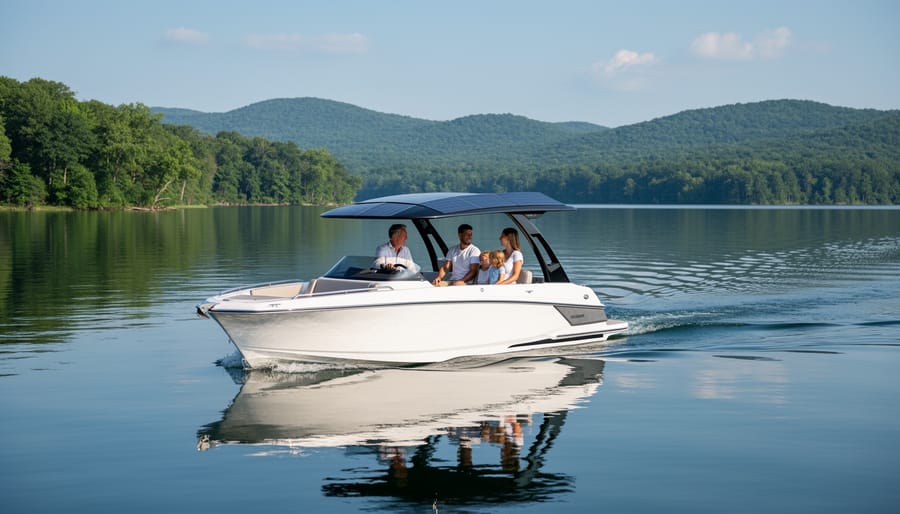
When you cruise under electric power, nothing comes out of a tailpipe. There’s no exhaust drifting across the surface, and no fuel or oil to leak, drip, or spill into the water below you. For anyone who loves a quiet cove or a clear mountain lake, that’s a meaningful change. The places we go boating are the same places we hope our kids and grandkids will enjoy one day.
This matters most on lakes and slow-moving rivers, where water doesn’t flush itself out quickly. Even small amounts of fuel and oil residue can linger in these places, so removing the source altogether gives them a real head start on staying healthy. Many drinking-water reservoirs, nature preserves, and protected waterways already encourage low-impact boats, and some limit or restrict combustion engines entirely. An electric boat is welcome in more of those places, which means more shoreline, more hidden coves, and more calm water to explore.
The care doesn’t have to stop at the motor, either. Many boaters pair their electric setups with solar panels, and it’s good to know that responsible options like solar panel recycling help keep the whole system sustainable from start to finish.
A Gentler Presence for Wildlife
One of the quiet joys of an electric boat is how much closer it lets you get to the natural world. Without the roar and rumble of a combustion engine, the loudest sound on the water is often a gentle ripple at the bow. That calm opens up a different kind of outing, one where you can drift near a heron fishing in the shallows or watch a turtle sunning on a log without sending it scrambling for cover.
Sound is only part of the story. Electric motors produce far less vibration than a running engine, and those vibrations can travel through the hull and into the water. Many fish and other aquatic animals sense their surroundings through exactly this kind of underwater disturbance, so a smoother, softer ride means less to startle them. Birds nesting along the shoreline tend to respond to a quiet approach too, often staying put while you pass.
For anglers, photographers, and families who simply love to watch wildlife, this makes a real difference. You can cut the motor to a low hum, glide slowly along a quiet cove, and let the scene unfold around you. It is a gentler way to share the water, and it often rewards patience with the sightings people remember longest.
A Better Day on the Water: The Onboard Experience
Step aboard an electric boat and the first thing you notice is what’s missing. There’s no roar, no rumble, no haze of exhaust drifting back into the cockpit. Just a soft hum and the sound of water against the hull.
That calm changes how a day on the water feels. You can talk at a normal volume, hear a heron call from the shoreline, and actually listen to the people you brought along. Fishermen often find it just as useful, since a quiet approach means fewer spooked fish.
Then there’s the way these boats respond. Electric motors deliver what’s called instant torque, which simply means the motor reacts the moment you ask for power. Nudge the throttle and the boat moves right away, smoothly and without a lurch or a pause. That makes docking, drifting along a bank, and holding position feel natural, even for newer boaters.
Here’s what many owners enjoy most:
- A quiet ride that keeps conversation easy
- Smooth, immediate acceleration with minimal vibration
- No fuel smell or exhaust fumes at the helm
- Simple push-button controls that are easy to learn
- A relaxed setting that suits both family outings and fishing
One family on a quiet inland lake put it to the test. They had spent years running a loud, vibrating outboard that left the kids tired and everyone shouting over the engine. After switching to an electric pontoon, the difference was immediate. Their daughter started pointing out turtles and ospreys she would never have noticed before, and the afternoon cruises stretched longer because nobody wanted to head back. The father, an avid angler, said he now drifts into coves at dawn without a single fish scattering, and he comes home without that lingering smell of fuel on his clothes.
None of this requires technical know-how. Press a button, turn the key or dial, and glide away. The experience is simply easier, calmer, and more connected to the water, which is exactly why so many boaters say they never want to go back.
How Electric Boats Save Time and Money Over the Long Run
Ownership is where an electric boat quietly pays you back. The benefit builds over seasons rather than arriving all at once, and it comes from two places: less spent on energy and less time spent on upkeep.
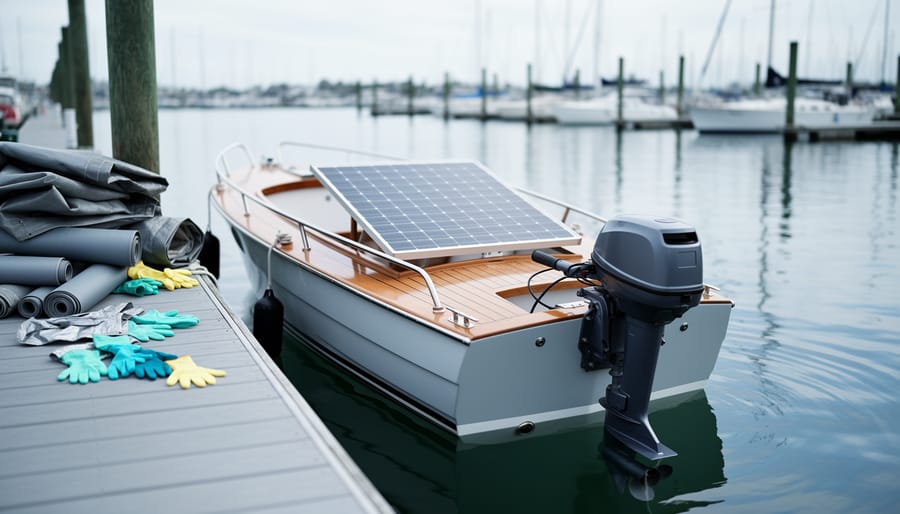
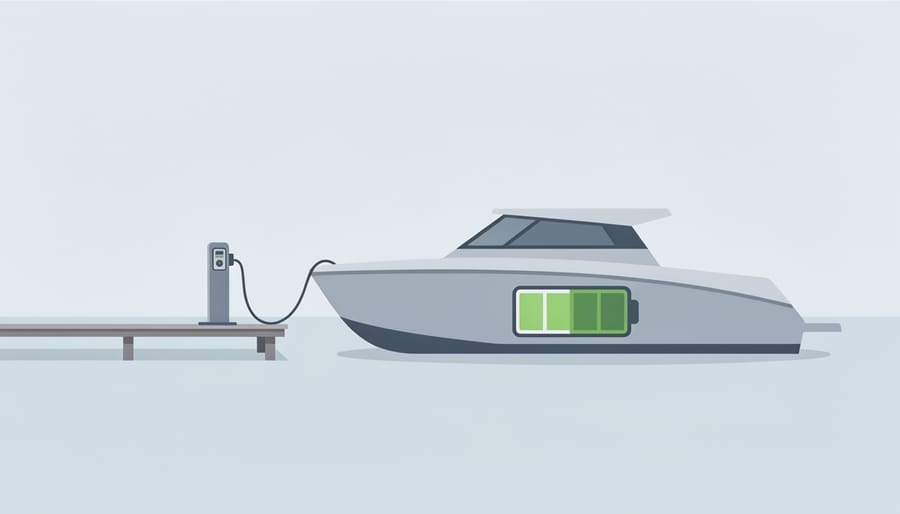
Start with energy. Charging is usually cheaper than buying fuel for the same outing, and the gap widens the more you cruise. Charging is also simpler than it sounds. At home, you plug into a standard outlet or a dedicated charger, much like an electric car. At the dock, many marinas offer shore power you can use overnight. And for a free top-up, solar panels turn sunny days into extra range. A portable solar kit is a flexible way to add that sunshine without a permanent installation.
Then there’s the maintenance side. An electric motor has far fewer moving parts than a combustion engine, so there’s simply less to wear out. Here’s what many electric owners get to skip or cut back:
- Oil and filter changes
- Fuel system service, including fuel filters
- Spark plug replacement
- Exhaust components and the repairs that come with them
- Regular fuel purchases and the trips to the pump
Winterizing gets easier too. Without a combustion engine to drain, flush, and protect from the cold, end-of-season prep shrinks to basic care of the batteries and the hull.
It’s only fair to be upfront about the other side of the ledger. Electric boats can cost more to buy than comparable fuel-powered models, mainly because of the battery bank. Over time, lower energy and service costs help close that gap, but how quickly depends on how often you’re out on the water. A weekend cruiser will see slower savings than someone on the lake several days a week.
The smart move is to look at the whole picture: purchase price, charging setup, and how you actually plan to use the boat. Many boaters find that fewer chores and quieter, simpler ownership are worth as much as the dollars saved.
Where Electric Boats Shine: Real-World Uses and Applications
Electric boats earn their keep wherever calm, quiet, and low-impact matter most. Here are a few places where the benefits really show up.
Fishing and wildlife viewing. Slipping up to a shoreline without spooking the fish or the herons is a big advantage. Anglers like trolling silently, and paddlers-turned-boaters appreciate drifting close enough to watch an osprey hunt.
Family pontoon cruising. A pontoon with an electric motor makes for relaxed afternoons where everyone can talk without raising their voices. No fumes at the dock, no fuel to haul, and kids can sit near the back without a noisy engine beside them.
Lake communities with rules. Many lakes have horsepower limits, emission restrictions, or quiet-water zones. An electric boat fits those guidelines naturally, so you can enjoy the water with confidence and be a good neighbor while you’re at it.
Sailboat auxiliary power. Sailors can swap a noisy auxiliary engine for an electric motor that gets them in and out of the marina smoothly, then lets the wind do the real work.
Tours and rentals. Operators find that guests love the quiet ride, and a boat that’s easy to start and simple to maintain keeps the fleet working.
Solar panels add a bonus. On sunny days they feed energy back into the batteries, topping them off while you’re anchored or stretching your range between charges. If you’re curious about adding them, our guide to choosing an E Marine system walks through the options in plain language.
One customer, a retired teacher on a small inland lake, switched her fishing boat to electric power with a solar panel on the roof. She told us the biggest surprise was the mornings: loons calling nearby, and fish she’d never gotten close to before. Her boat now charges itself while she’s off the water.
Think about how you spend your time afloat, then match the boat to that lifestyle. The right fit makes every outing easier.
Common Questions About Electric Boat Benefits
Most first-time buyers ask the same handful of things, so here are friendly, straight answers. Exact figures vary by boat, battery size, and how you like to cruise, which is why the details below stay general.
How far can an electric boat go on a charge?
Range depends on the battery bank, the size and weight of the boat, and your speed. Slower, steady cruising stretches a charge much further than running flat out, and solar panels can add extra miles on sunny days.
How long does charging take?
It varies with battery size and the charger you use. Many boaters simply plug in at home or at the dock after an outing, so the boat is ready by the next trip.
Are electric boats powerful enough?
Yes, for the right match of boat and motor. Electric motors deliver strong, immediate response, so they handle everyday cruising, fishing, and family outings with confidence.
Do they work in saltwater and cold weather?
They can, when the boat is built and equipped for those conditions. Saltwater calls for marine-grade components and good rinsing habits, and cold can trim battery performance a bit, so ask about options suited to your waters.
Are they really lower maintenance?
Generally, yes. With no oil changes, fuel filters, or engine winterizing, routine upkeep is simpler, though you’ll still care for the hull, battery, and electrical connections.
The right answer to all of these shifts with your lifestyle. A quiet fishing cove, a busy family lake, and a coastal harbor each call for something a little different, and a boat that suits one may not suit another.
That’s where a conversation helps. Our factory-trained staff can walk you through range, charging, and power based on how and where you actually boat. Bring your questions, and we’ll help you find a setup that fits your needs and your waters.
The benefits of an electric boat come down to three simple things. For the water, you get cleaner air, no fuel or oil discharge, and a quieter presence around the birds and fish that live there. For you, the day on the water gets calmer, with smooth power, no fumes, and enough quiet to hear the people beside you and the nature around you. And for ownership, there’s less routine upkeep and a straightforward way to charge, whether that’s at home, at the dock, or from the sun.
Better batteries, more efficient motors, and smarter charging keep making these advantages easier to enjoy. That means more boaters, from weekend anglers to lake-community families, can find an electric or solar-powered boat that fits how they actually spend their time.
If you’re curious, the best next step is a conversation. Think about where you boat, how far you like to go, and who comes along. Then reach out to the Solar Sailing team. They’ll help you explore your options and find the right fit for your waters, your routine, and your goals.