Discovering an electric or solar-powered boat buried beneath years of accumulated belongings transforms what seems like an overwhelming cleanup challenge into a genuine opportunity. These sustainable watercraft have surged in value throughout 2026, with the marine industry’s shift toward emission-free propulsion creating strong buyer demand even for vessels requiring restoration work.
Start by documenting everything before moving a single item. Photograph the boat from multiple angles, capture serial numbers on the hull and motor components, and record any visible manufacturer labels or model information. This initial documentation protects you legally and helps establish value later, even if the vessel appears neglected or damaged.
Safety comes first during the assessment phase. Electric boat batteries, particularly lithium-ion systems common in solar-powered vessels, can pose serious risks if compromised by moisture, rodent damage, or years of inactivity. Disconnect all power sources before beginning cleanup work, and consider hiring a certified marine electrician for an initial safety inspection if you’re unfamiliar with electric propulsion systems.
The cleanup process itself differs significantly from conventional boats. Remove debris systematically, working from top to bottom while watching for water damage to electrical components and solar panels. Many owners underestimate how resilient these systems can be. We’ve seen boats sitting dormant for five years spring back to life after proper cleaning and battery replacement.
Your selling strategy depends entirely on honest assessment. A functioning electric boat commands premium pricing in 2026’s eco-conscious market, but even non-operational vessels attract buyers seeking restoration projects or salvageable components like solar panels and electric motors. The process mirrors other property cleanout challenges, much like selling a hoarder house where hidden value often exceeds initial expectations. Understanding your boat’s true condition empowers you to choose the right path forward.
Understanding What You’ve Found: Types of Electric and Solar Boats in Estate Cleanouts
Estate cleanouts often reveal hidden treasures, and electric boats are among the most surprising. Unlike traditional powerboats, these vessels attracted a specific type of owner: early adopters of sustainable technology, environmental advocates, and marine enthusiasts who valued quiet, clean waterways. Many accumulated multiple boats over decades, experimenting with evolving technology or rescuing vessels others had abandoned.
The most common find is the basic electric trolling motor setup. These range from simple 12-volt systems bolted onto small aluminum fishing boats to more sophisticated 24-volt or 36-volt configurations on pontoons and bass boats. While not technically solar electric boatsthey represent the entry point for many who later upgraded to full electric propulsion. Look for battery boxes, often corroded or leaking, and check the motor mount for brand names like Minn Kota or MotorGuide.
Mid-tier discoveries include dedicated electric boats from the 1990s through early 2000s. Companies like ElectraCraft and Duffy manufactured small electric launches and cruisers that appealed to lake communities and environmentally conscious retirees. These vessels feature built-in battery compartments, dedicated charging systems, and often include bench seating or small cabins. They’re identifiable by their boxy hull designs and absence of fuel tanks or exhaust systems.
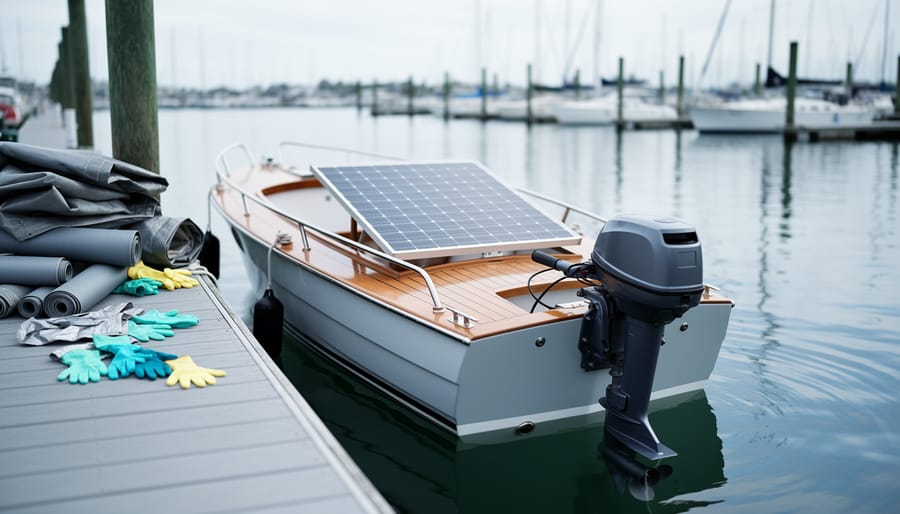
The jackpot finds are solar-equipped boats. Early adopters mounted rigid solar panels on custom frames or bimini tops, creating hybrid charging systems. Some properties contain partially completed DIY solar conversions, with panels, charge controllers, and marine-grade wiring still in boxes. Others house factory-built solar boats from boutique manufacturers who catered to the eco-luxury market.
Why the accumulation? True believers in electric propulsion often bought damaged boats cheaply, intending to restore or repurpose components. They saved batteries planning to build larger banks, collected motors for comparison testing, or simply couldn’t resist rescuing another vessel from the landfill.
Identifying value starts with brand recognition and completeness. Factory-built boats with intact electrical systems hold more value than cobbled-together conversions. Documentation matters too. Manuals, original purchase receipts, and maintenance logs signal an owner who cared, even if hoarding eventually overwhelmed them.
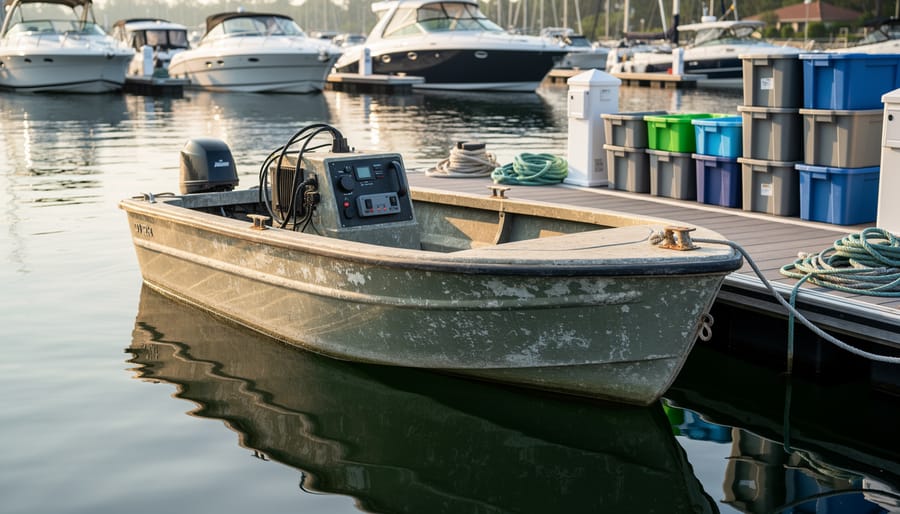
Safety First: Assessing the Boat’s Condition Before You Begin
Battery System Evaluation
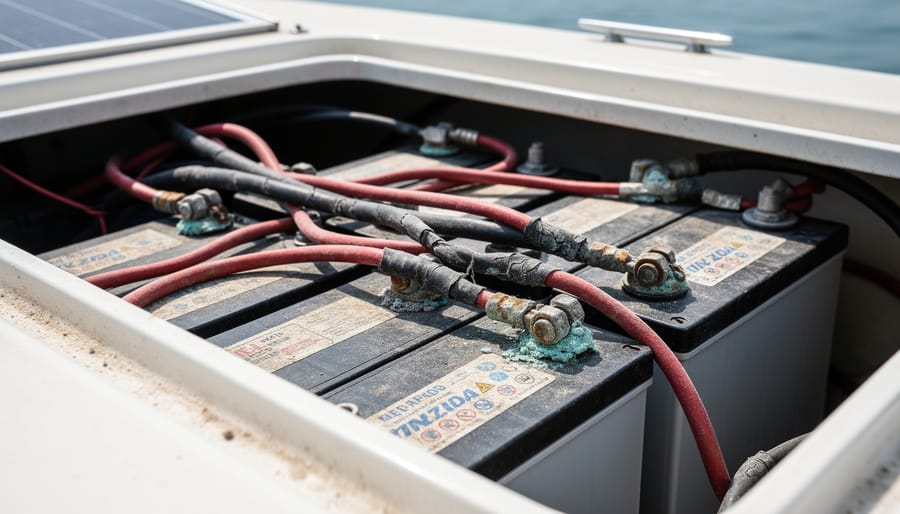
Before touching anything, disconnect the boat from shore power and wear protective gloves and eyewear. Start your battery inspection from a distance. Look for obvious bulging, cracks, or white crystalline deposits around terminals, which signal a dangerous battery that needs professional removal. Swelling in lithium batteries indicates internal damage and potential fire risk, while lead-acid batteries showing corrosion or leaking fluid can release toxic fumes.
Check solar panels for cracked glass, delamination (peeling layers), or burn marks on junction boxes. Water intrusion destroys panels from the inside, so if you spot discoloration or milky spots between layers, they’re compromised. Gently inspect wiring without pulling on connections. Look for exposed copper wire, melted insulation, or green corrosion at terminals. Corroded connections create resistance that generates heat and fire hazards.
Smell matters. A rotten egg odor from lead-acid batteries means dangerous hydrogen gas buildup. Lithium batteries emitting a sweet or chemical smell are failing and pose serious hazards of small lithium-ion batteries including thermal runaway.
If batteries are hot to the touch without being charged, if you see rust inside battery compartments, or if multiple warning signs appear together, stop immediately. This isn’t a DIY situation. Contact a marine electrician familiar with electric propulsion systems before proceeding. Taking photos of everything helps professionals assess the situation remotely and gives you documentation for potential buyers or insurance purposes.
Hull and Structural Integrity
Start your inspection on a dry day if possible, allowing you to see water stains and moisture damage more clearly. Begin with the hull’s exterior, running your hands slowly along the surface to feel for soft spots, blisters, or areas that flex under gentle pressure. These are telltale signs of delamination or water intrusion that has compromised the fiberglass layers.
Pay special attention to the transom where the motor mounts. Press firmly here, any sponginess means water has penetrated the core material, a costly repair that often exceeds the boat’s value. Check the bilge thoroughly with a flashlight. Look for standing water, rust stains, or a musty smell indicating chronic moisture problems.
Examine all through-hull fittings and the areas around them. Cracks radiating from these penetration points are common stress failures. Tap the hull gently with a plastic mallet or your knuckles, listening for a solid sound versus a dull thud that suggests hidden delamination.
For wooden components, probe with an awl or screwdriver. Sound wood resists penetration, while rotted areas crumble or allow the tool to sink in easily. Don’t overlook deck fittings, hatches, and railings, these attachment points often hide water damage beneath mounting hardware.
Document everything with photos and notes. Minor cosmetic cracks may be repairable, but extensive structural damage, soft decking, or a compromised transom usually means the boat is worth more as parts than as a restoration project.
The Cleanup Process: From Overwhelmed to Organized
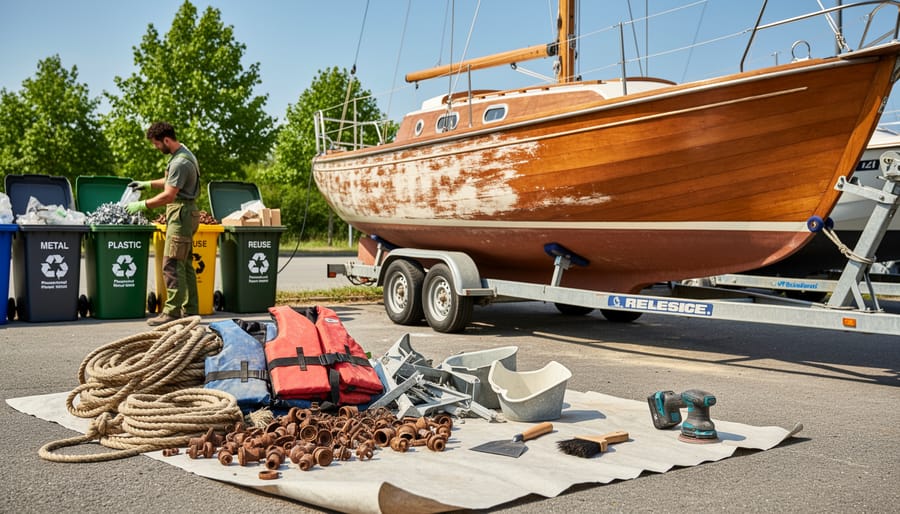
Standing in front of a boat buried under years of accumulated belongings can feel paralyzing, but breaking the process into manageable stages transforms chaos into progress. Start with the exterior deck and work your way inward, creating zones as you go: items to keep with the boat, personal belongings to return to family, recyclables, and genuine trash.
Begin by removing loose debris and obvious garbage from the deck and cockpit. This first pass creates breathing room and lets you see what you’re actually dealing with. Wear heavy gloves and sturdy shoes, as hoarder environments often hide sharp objects, rusty hardware, or broken glass beneath layers of accumulated items. Bring contractor bags, clearly labeled bins, and a camera to document everything before, during, and after cleanup.
The cabin presents the biggest challenge. Remove items shelf by shelf, locker by locker, rather than attempting to clear everything at once. You’ll likely find marine equipment mixed with household items, old newspapers, clothing, and miscellaneous possessions. Sort methodically: marine batteries go in one pile, potentially valuable boat parts in another, and personal effects requiring careful handling separate from trash.
Pay special attention to electrical components and hazardous materials. Old batteries, fuel cans, paint thinners, and cleaning chemicals cannot go in regular trash. Contact your local hazardous waste facility for proper disposal. If you discover damaged solar panels during cleanup, research whether you can recycle solar panels through specialized e-waste programs rather than sending them to landfills. Many communities now have electronics recycling centers that accept photovoltaic panels, recovering valuable materials like silicon, silver, and aluminum.
Once you’ve cleared the major accumulation, deep clean every surface. Use eco-friendly marine cleaners instead of harsh chemicals that harm waterways. White vinegar mixed with water handles most grime, while baking soda paste tackles stubborn stains. Scrub the bilge thoroughly, as years of neglect often leave it filled with oily water and debris that can mask serious hull issues.
As spaces become visible, organize remaining boat equipment logically. Group anchors and lines together, safety gear in one area, and navigation equipment separately. This organization helps during assessment and makes the boat more presentable to potential buyers or restoration professionals.
The final step involves proper ventilation and dehumidification. Open all hatches, run fans if shore power is available, and consider using moisture absorbers. A boat that smells fresh and feels dry immediately appears more valuable than one that reeks of mildew and neglect. This cleanup phase typically takes several full days, but the transformation reveals whether you’ve found a hidden gem or a parts donor.
Determining Value: Is Restoration Worth It?
Deciding whether to restore an electric boat found during a property cleanout comes down to simple math and realistic expectations. You need to weigh three numbers: what the boat could sell for after restoration, what it would cost to get it there, and what you could get for it right now in its current state.
The electric marine sector is experiencing significant momentum. With solar boat market growth accelerating into 2026, demand for these vessels has never been stronger. Buyers who once hesitated are now actively seeking electric alternatives as gas prices fluctuate and marina charging infrastructure expands. This shift means a well-restored electric boat can command premium pricing, especially if it features modern lithium batteries and functional solar panels.
Start by getting a realistic restoration estimate. Contact marine electricians who specialize in electric propulsion systems, not general boat mechanics. A new lithium battery bank alone runs $3,000 to $12,000 depending on capacity. Add electrical system repairs, solar panel replacement, hull work, and cosmetic restoration, and you are easily looking at $8,000 to $25,000 for a comprehensive rebuild. Compare this against current resale values for similar models in your area by checking recent sales on specialized electric boat marketplaces and marine classifieds.
| Boat Condition | Restoration Cost | Post-Restoration Value | As-Is Sale Value |
|---|---|---|---|
| Excellent (minor updates needed) | $2,000-$5,000 | $15,000-$30,000 | $12,000-$22,000 |
| Good (battery replacement, cleaning) | $6,000-$12,000 | $12,000-$22,000 | $5,000-$10,000 |
| Fair (major electrical work needed) | $10,000-$20,000 | $10,000-$18,000 | $2,000-$5,000 |
| Poor (extensive damage, parts only) | $15,000-$30,000+ | $8,000-$15,000 | $500-$2,000 |
Finding an appraiser who truly understands electric marine technology makes all the difference. General marine surveyors often undervalue electric boats because they lack familiarity with lithium systems and solar integration. Search for certified appraisers through electric boat manufacturers or sustainable boating associations. They can identify valuable components that general surveyors miss, like high-quality charge controllers or rare electric motor models that fetch premium prices even as salvage.
If the numbers show restoration costs exceeding or even approaching the boat’s post-restoration value, selling as-is to an enthusiast or parting it out makes better financial sense. Some components hold tremendous standalone value. A functioning electric motor might sell for $3,000, intact solar panels for $1,500, and a good hull to someone building their own electric conversion for $2,000 to $5,000.
Restoration Essentials: Bringing an Electric Boat Back to Life
Upgrading to Modern Battery Technology
When you crack open the battery compartment of an older electric boat, you’ll often find heavy lead-acid batteries that might still technically work but are anchoring the vessel in the past. Upgrading to lithium batteries is one of the single most impactful improvements you can make, transforming both performance and market appeal.
Modern lithium iron phosphate (LiFePO4) batteries weigh about half what comparable lead-acid units do, which improves handling and efficiency on the water. They also charge faster, discharge more consistently, and last three to five times longer. For a restoration budget, this means spending more upfront but adding substantial value that eco-conscious buyers recognize immediately.
Compatibility is your main hurdle. Check whether the existing charging system can handle lithium chemistry, as many older chargers designed for lead-acid will damage lithium cells or fail to charge them properly. You might need a new charger or a battery management system (BMS) that prevents overcharging and balances individual cells. Factor these costs into your decision.
Installing lithium batteries also frees up space and weight capacity. Some restorers use the extra room for additional solar panels or storage, further boosting the boat’s appeal. When listing the vessel for sale, highlight this upgrade prominently. Buyers understand that modern batteries mean less maintenance, more time on the water, and fewer trips to charging stations, all of which justify a higher asking price.
Solar Panel Replacement and Enhancement
When evaluating solar panels from a stored boat, start by checking their manufacturing date and efficiency ratings. Panels older than five years have likely degraded significantly and produce 15-20% less power than current models. If the existing panels still generate reasonable voltage under testing and the boat’s electrical needs are modest, keeping them can save thousands in restoration costs.
However, upgrading to the best boat solar panels available in 2026 makes sense for serious use. Modern panels deliver 30-40% more power per square foot, charge faster in low-light conditions, and weigh considerably less. This efficiency translates to shorter charging times and extended range, especially when combined with solar charging at home between outings.
Installation requires proper marine-grade mounting hardware, waterproof connections, and optimal angle positioning for your region’s sun exposure. Position panels to avoid shading from railings or equipment. A charge controller compatible with your new battery system prevents overcharging and maximizes panel lifespan. Professional installation ensures warranty protection and electrical code compliance.
Motor and Electrical System Overhaul
The motor and electrical system form the heart of any electric boat, and neglected components can harbor serious safety risks. Start by having a factory-trained technician perform a comprehensive diagnostic test of the motor. They’ll check for water intrusion, bearing wear, and magnet degradation, common issues in boats stored in humid conditions. Motor replacement might sound expensive, but 2026 motors are more efficient and powerful than systems from even five years ago, often paying for themselves through improved performance.
The charging system deserves equal attention. Outdated chargers can overcharge modern batteries or fail to charge them properly, creating fire hazards. A technician should inspect all wiring for rodent damage, corrosion, and proper gauge sizing. Many hoarder boats have DIY electrical modifications that violate marine safety standards. Bringing everything up to American Boat and Yacht Council (ABYC) compliance protects you legally and ensures the next owner’s safety.
Don’t skip the controller, the computer managing power flow between batteries and motor. Controllers fail silently, then catastrophically. A qualified technician can test its response under load and replace it if needed, giving you peace of mind whether you’re keeping the boat or handing keys to a buyer.
Selling Your Cleaned-Out Electric Boat: Where and How
Once you’ve cleaned and assessed your electric boat, the next step is connecting with buyers who will appreciate its sustainable value. Selling an electric or solar boat from a hoarder property cleanout requires a different approach than selling conventional boats because you’re targeting a specific, environmentally conscious audience.
Start by documenting everything thoroughly. Take high-quality photos in natural light that showcase the boat’s condition honestly, both its potential and any remaining imperfections. Buyers interested in electric boats value transparency. Include detailed shots of the solar panels, battery compartment, motor, control systems, and any documentation or manuals you’ve recovered during cleanup. If you’ve done restoration work, photograph the before-and-after transformation. This visual story demonstrates care and builds trust.
Your listing description should lead with the sustainability angle. Don’t bury the fact that this is an electric or solar-powered vessel. Open with specifics: battery type and age, solar panel wattage and condition, motor specifications, and estimated range. Environmentally conscious buyers want technical details upfront. Then share the boat’s story, how you discovered it, what you’ve done to bring it back, and the opportunity it represents for someone seeking cleaner waterways. This narrative differentiates your listing from generic boat sales.
Finding the right marketplace matters enormously. You’ll reach more qualified buyers through specialized channels:
- Specialized electric boat dealers who understand the technology and have established buyer networks
- Online sustainable boating marketplaces focused specifically on eco-friendly vessels
- Eco-conscious boating communities and forums where members actively seek electric alternatives
- Consignment through green marine retailers who can showcase the boat alongside similar models
- Auction platforms with categories for specialty or sustainable watercraft
Pricing requires research into the 2026 electric boat market. Check completed sales rather than asking prices, and account for your boat’s age, condition, and any restoration you’ve completed. If you’ve upgraded to modern lithium batteries or high-efficiency solar panels, that significantly increases value. Consider pricing slightly below market if you need a quick sale, or higher if you’ve documented exceptional restoration work and can wait for the right buyer who appreciates the effort.
Be prepared to answer technical questions. Buyers will ask about battery health, charging times, range under various conditions, and maintenance history. If you don’t know the answers, say so honestly. Many buyers actually prefer purchasing from someone who’s transparent about gaps in knowledge versus a seller who fabricates details.
Consider timing your sale strategically. Spring and early summer see peak interest as boaters prepare for the season. However, passionate electric boat enthusiasts browse year-round, so don’t hesitate to list during off-season months, especially if your boat is stored safely and you’re not rushed.
Connect with local electric boat communities before listing. They often have members seeking project boats or upgrades, and word-of-mouth in these tight-knit groups can lead to serious buyers who’ll appreciate your vessel’s second-chance story.
A Second Life: Customer Success Stories
The stories of rescued electric boats prove that one person’s overwhelming cleanup can become another’s sustainable dream, or even your own unexpected adventure on the water.
When Maria inherited her uncle’s property in Seattle, she faced four storage units crammed with decades of accumulated belongings. Buried beneath gardening equipment and boxes of magazines, she found a 1998 Duffy electric boat with a dead battery system and sun-bleached seats. Rather than haul it to the scrapyard, she invested $3,200 in new lithium batteries and basic restoration. Today, she spends weekends silently gliding across Lake Washington, and the boat that nearly ended up in a landfill has kept over 400 gallons of gasoline out of the lake ecosystem in just two seasons.
The Chen family discovered a different treasure during their father’s estate cleanout in Florida. His solar-equipped pontoon boat had sat untouched for seven years, its deck cluttered with non-functioning equipment he’d collected. After three weekends of cleaning and a professional electrical system evaluation, they listed it on specialized green boating forums. Within two weeks, a marine biology teacher bought it for his educational program, where it now introduces students to renewable energy while monitoring coastal waters. The Chens received $8,500 for a vessel they’d almost donated to a salvage yard.
Not every rescue requires major investment. Tom found a small electric fishing boat during a property cleanout job in Minnesota. The hull was sound, but the motor needed rewiring. He spent $600 and twenty hours of work, then sold it to a local fishing guide transitioning to quieter, eco-friendly lake tours. The guide now uses it daily, and Tom’s modest effort diverted 850 pounds of fiberglass and metal from the waste stream.
These transformations share a common thread: someone recognized potential where others saw only problems. Each restored electric boat represents thousands of hours of pollution-free operation ahead, quieter waterways for wildlife, and proof that sustainable choices can emerge from unexpected places. The environmental math is compelling, every electric boat rescued and returned to service prevents an average of 1,500 pounds of CO2 emissions annually compared to gas alternatives.
Your hoarder cleanout discovery could write the next chapter in this growing collection of redemption stories.
What began as an overwhelming cleanout task revealed something unexpected: a chance to rescue sustainable marine technology from oblivion. Whether you’ve chosen to restore that neglected electric boat for your own adventures or found the perfect buyer who shares your environmental values, you’ve kept a zero-emission vessel out of the landfill and given it purpose again.
The environmental impact extends beyond a single boat. Every electric or solar-powered vessel returned to the water represents countless gallons of fuel that won’t pollute our lakes, rivers, and coastal areas. You’ve contributed to cleaner waterways while proving that sustainability sometimes hides in the most unexpected places, even buried under years of accumulated belongings.
Hoarder property cleanouts rarely come with instruction manuals, especially when they involve specialized marine technology. Don’t navigate this journey alone. Factory-trained electric boat technicians can assess systems you’re unfamiliar with, provide realistic restoration estimates, and connect you with the right buyers if you’re selling. Their expertise transforms guesswork into confident decisions, whether you’re evaluating a vintage electric motor or modern solar panels.
The boat you discovered wasn’t just another item to dispose of during a difficult cleanout. It represented someone’s dream of eco-friendly boating, and now you hold the power to fulfill that vision, either by experiencing it yourself or passing it forward to someone who will.
Every restored electric boat gliding silently across the water tells a redemption story. Yours started in chaos and ends with renewed purpose, cleaner air, and quieter shores. That’s a transformation worth celebrating.